Preparing French Content for Medical Congresses and Healthcare Trade Shows: A Localization Guide for MedTech and HealthTech Companies
Autumn is one of the busiest periods for the medical industry in Europe. International MedTech and HealthTech companies prepare for major medical congresses, healthcare trade shows, scientific meetings, and product demonstrations across France.
Planning typically focuses on logistics, booth design, speaker preparation, and product launches. Content localization often enters the process much later, despite affecting nearly every interaction with healthcare professionals throughout the event.
Whether presenting clinical evidence at a scientific congress or demonstrating a new digital health solution on the exhibition floor, adapting materials for French medical congresses involves far more than translating text. It requires content that feels natural to French healthcare professionals, remains scientifically accurate, and delivers a consistent experience across every touchpoint.
Medical congresses and healthcare trade shows require different communication strategies
Medical congresses and healthcare trade shows share exhibition spaces, product demonstrations, and networking opportunities, but their objectives are different.
Medical congresses primarily revolve around scientific exchange. Companies present clinical data, sponsor satellite symposia, meet key opinion leaders (KOLs), and discuss new evidence with healthcare professionals.
Healthcare trade shows place greater emphasis on commercial conversations, product demonstrations, partnerships, procurement, and business development.
Many organizations participate in both types of events during the same season. As a result, they often produce a wide range of materials simultaneously, including:
- scientific presentations
- symposium slide decks
- booth graphics
- product brochures
- software demonstrations
- videos and subtitles
- digital displays
- landing pages
- educational materials
- follow-up communications
Although these assets serve different purposes, they should communicate the same product story with consistent terminology and messaging.
Every interaction contributes to the overall experience
Healthcare professionals rarely discover a product through a single piece of content.
A cardiologist may first notice a device on an exhibition stand, attend a symposium later in the day, watch a software demonstration, collect a brochure, scan a QR code, and revisit the product website after returning to the hospital. Each interaction builds upon the previous one.
Terminology that changes between the booth, presentation, brochure, and website creates unnecessary friction. Product names, clinical concepts, interface labels, and value messages should remain consistent regardless of format. This becomes particularly important when introducing innovative technologies, where healthcare professionals are still developing familiarity with new terminology or workflows.
For international companies, localization helps ensure that every interaction supports the same message rather than introducing avoidable inconsistencies.
French healthcare professionals expect communication that reflects local clinical practice
English has become the language of international scientific exchange, yet French-language content continues to play an important role during medical events held in France.
Many healthcare professionals read and discuss scientific publications in English. However, educational materials, product documentation, software interfaces, demonstrations, and marketing communications are generally easier to process when presented in their native language.
Native-language content supports faster comprehension during busy congress schedules, where visitors often move rapidly between presentations, exhibition stands, and meetings.
It also reflects familiarity with local clinical terminology and professional conventions.
This applies not only to brochures and presentations, but also to:
- software demonstrations
- user interfaces
- product videos
- interactive displays
- QR-code landing pages
- digital training materials
Companies investing significant resources in congress participation naturally want to
engage HCPs effectively. Well-localized content removes unnecessary language barriers and allows discussions to focus on clinical value rather than interpretation.
Scientific credibility depends on more than accurate translation
Scientific communication is built on precision. Healthcare professionals notice inconsistent terminology, awkward phrasing, unsupported claims, and translations that appear disconnected from routine clinical language. Localization therefore extends beyond linguistic accuracy.
It includes considerations such as:
- accepted French medical terminology
- consistency with published clinical literature
- regulatory wording
- device-specific vocabulary
- locally accepted abbreviations
- numerical formats and units
- terminology used throughout the product portfolio
These details influence how naturally content is received by French-speaking audiences.
For companies presenting clinical evidence, localization also contributes to clearer scientific communication during interactions with investigators, specialists, and KOLs.
Well-prepared materials allow medical affairs teams to engage KOLs more effectively by ensuring that scientific discussions remain focused on the evidence rather than the language used to present it.
Software demonstrations deserve the same attention as printed materials
Digital health products have changed the way companies exhibit at medical events.
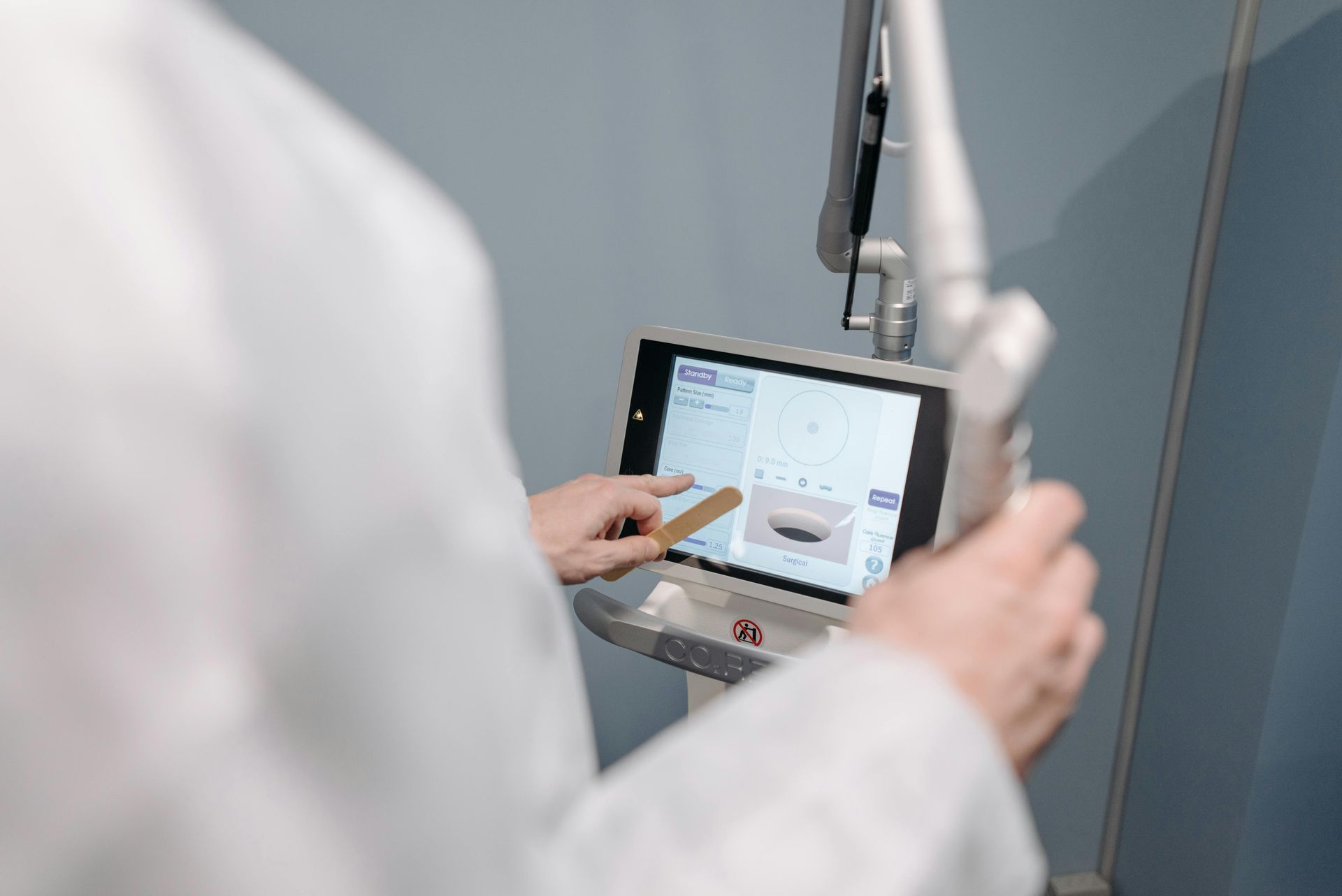
Medical software, connected devices, AI-powered decision support tools, and digital platforms are frequently demonstrated live.
These demonstrations often include:
- dashboards
- patient pathways
- alerts
- reports
- data visualizations
- onboarding workflows
- navigation menus
If interface elements remain partially translated, use inconsistent terminology, or contain unnatural wording, they immediately affect the perceived quality of the product.
For healthcare professionals evaluating software during a short demonstration, language forms part of the user experience.
Localization therefore includes reviewing how terminology appears within the interface, whether workflows make sense from a French clinical perspective, and whether key information can be understood quickly during a live demonstration.
Congress localization also supports commercial conversations
Not every visitor is attending scientific sessions.
Commercial teams meet distributors, purchasing groups, hospital representatives, and potential partners throughout the event.
These conversations rely on different types of content:
- sales presentations
- product sheets
- booth messaging
- pricing documentation
- implementation materials
- onboarding information
Although the audience differs from scientific sessions, consistency remains equally important.
Marketing materials should align with clinical messaging rather than presenting different terminology or product descriptions.
A coordinated localization strategy helps maintain coherence between scientific communication, commercial materials, and digital experiences.
Preparing content early reduces unnecessary revisions
Congress preparation typically involves multiple departments working simultaneously.
Marketing develops promotional materials. Medical affairs prepares scientific content. Product teams update software demonstrations.
Localization teams receive assets at different stages of completion.
When terminology decisions are postponed until the final weeks before an event, the same revisions often need to be repeated across presentations, brochures, interfaces, videos, and websites.
Early localization planning makes it easier to establish approved terminology, harmonize messaging across departments, prepare translation memories and glossaries, identify assets requiring review, reduce last-minute desktop publishing changes, maintain consistency throughout the event. This approach also simplifies future updates, since many congress materials are adapted for subsequent events or regional launches.
Localization contributes to the overall perception of quality
Visitors rarely evaluate individual assets in isolation. They evaluate the company as a whole.
The exhibition stand, product demonstrations, educational materials, scientific presentations, brochures, software interfaces, and follow-up communications collectively shape their impression of the brand.
Clear, consistent French-language content conveys attention to detail and professionalism. For MedTech and HealthTech companies exhibiting in France, localization is therefore part of the overall event experience. It supports scientific communication, facilitates commercial discussions, improves software demonstrations, and helps create coherent interactions across every stage of the visitor journey.
Companies invest considerable resources in medical congresses and healthcare trade shows. Ensuring that
French content reflects the same level of quality as the products themselves allows those investments to deliver greater value long after the event has ended.
Exhibiting at a medical congress or healthcare trade show in France?
If you're preparing materials in French for healthcare professionals, KOLs, distributors, or partners, I'd be happy to help you localize your content for a consistent and engaging event experience.
📩 Let’s discuss how I can support your team — Contact me

Emi Lecret
– Medical writer | translator | localization specialist | communication strategist for MedTech companies
Share