Information Architecture in Healthcare
What is Information Architecture (IA)?
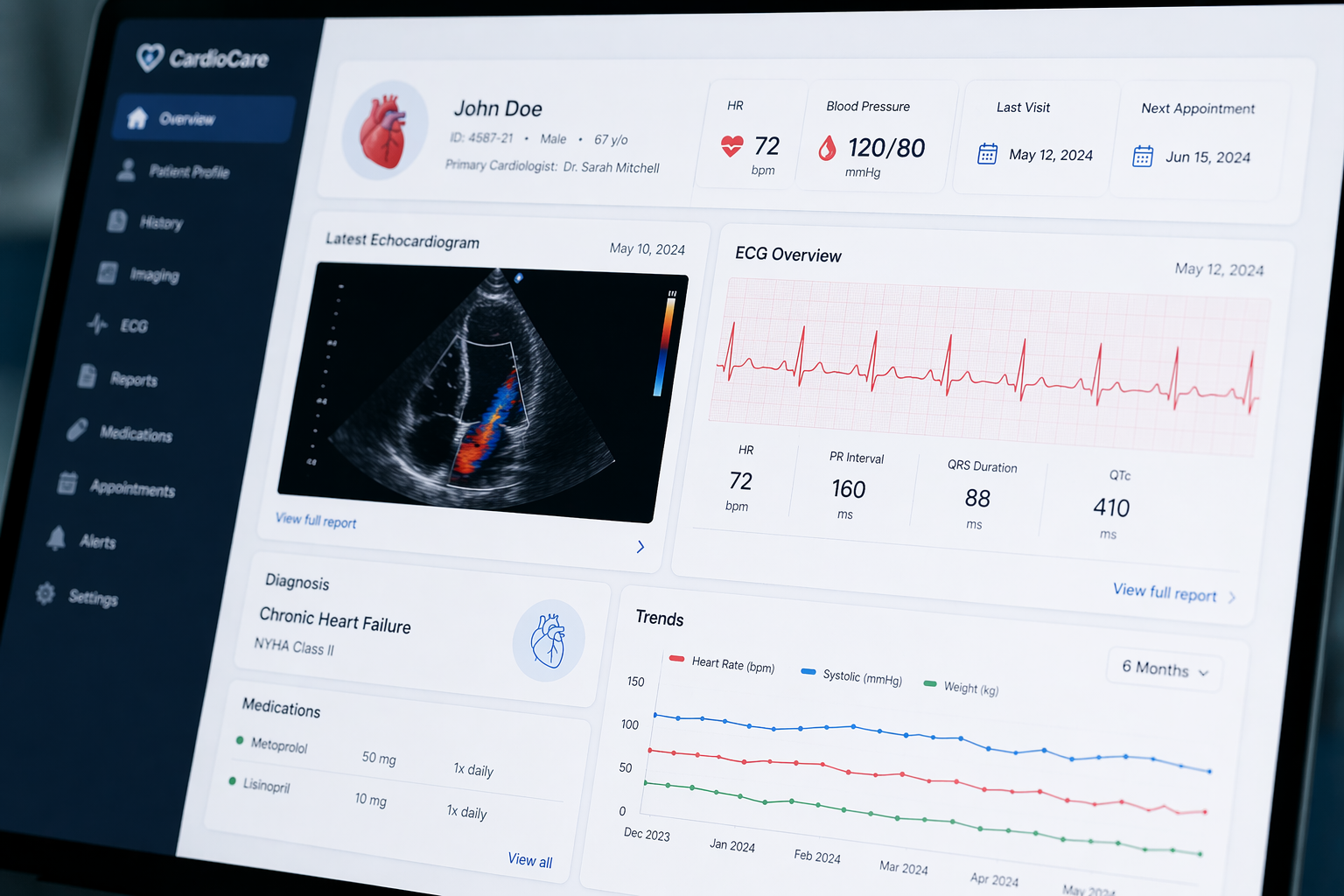
Information architecture in healthcare focuses on structuring complex medical information so it is easy to find, navigate, and use across interfaces, documents, and digital platforms. This includes organizing content, defining clear hierarchies, and designing logical information flows aligned with real user needs.
The goal is simple: make critical information immediately accessible, reduce search time, and
support fast, confident decision-making in clinical and operational environments.
How medical information is structured for usability
Information architecture organizes medical content based on real usage. The goal is to guide users directly to the right information.
Key principles:
- Clear hierarchies aligned with clinical priorities
- Logical grouping of related information
- Navigation that reflects real workflows
In practice:
.
- Critical information is immediately visible
- Access to key data requires minimal steps
- Structure is consistent across UI, IFUs, and digital platforms
This ensures faster navigation, better understanding, and more confident decisions.
Why Information Architecture matters in medical environments
In healthcare, poorly structured information directly impacts usability and efficiency. When content is difficult to navigate or inconsistent across systems, users spend more time searching, risk missing key information, and experience unnecessary cognitive load. This slows down workflows and increases the risk of error.
Well-designed information architecture removes this friction by
organizing content logically and
making key information immediately visible. It supports
faster access, clearer understanding, and more
reliable decision-making in clinical and operational contexts.
Where Information Architecture applies in healthcare
Information architecture is applied across all types of medical content and systems. It plays a key role in structuring medical device interfaces, organizing instructions for use, and designing digital health platforms.
It also ensures that
training materials and
medical communications are aligned and easy to navigate. By creating a consistent structure across these environments,
information becomes easier to access, understand, and use, regardless of the format or context.
The impact of clear Information Architecture in healthcare
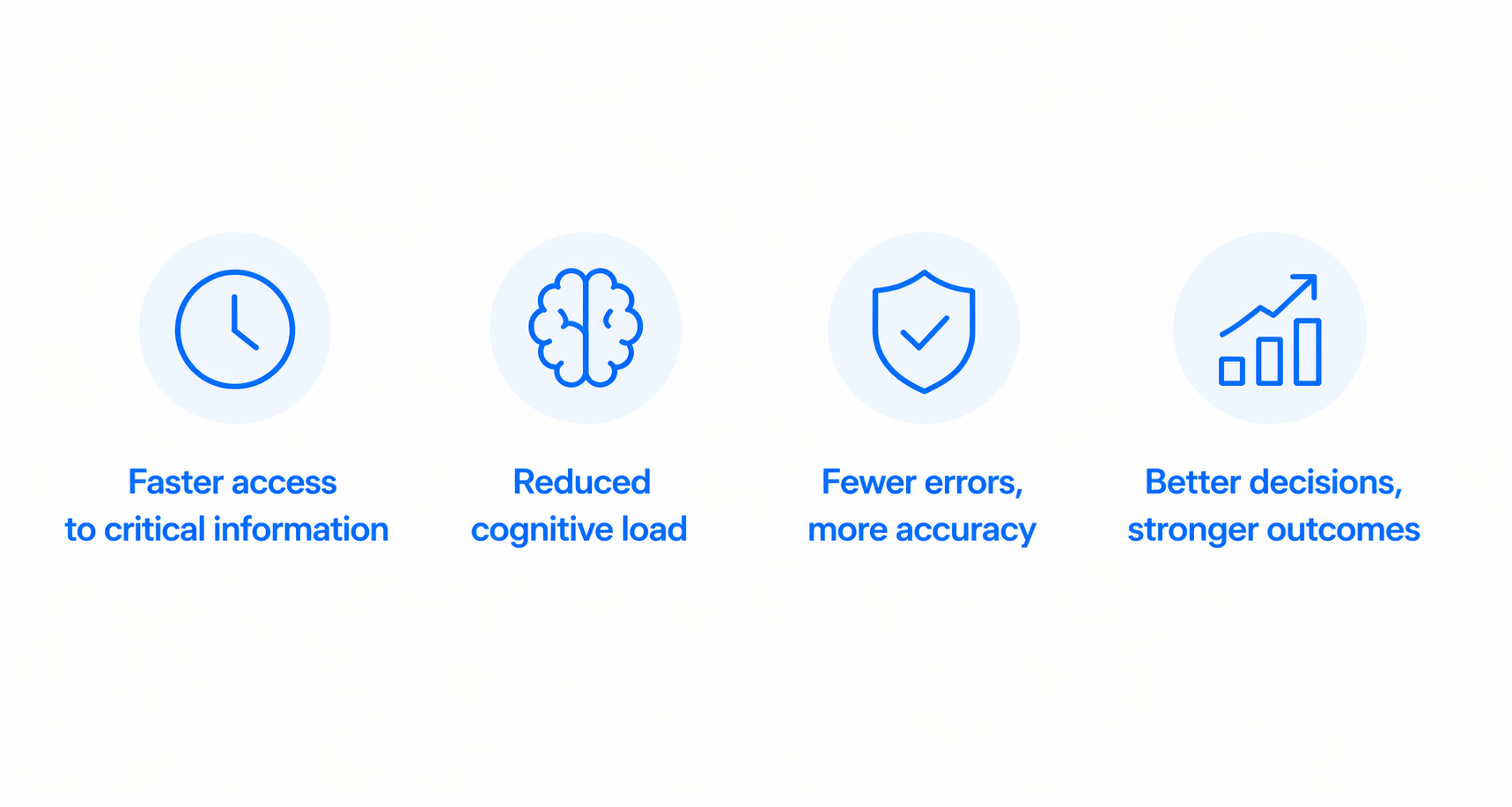
Clear information architecture improves how healthcare professionals and patients interact with systems and content. Information is easier to locate, faster to understand, and more reliable to use. This reduces cognitive load, limits errors linked to misunderstanding, and improves overall efficiency.
In practice, this leads to
faster workflows, more consistent use of medical devices and systems, and better decision-making. For organizations, it also supports smoother deployment across markets by ensuring that information remains structured and consistent at scale.
Information Architecture in Healthcare
MEDTECH, HEALTHTECH, DIGITAL HEALTH, PHARMA
Organize
- Define clear content hierarchies
- Structure information by priority
- Group related content logically
- Ensure consistency across documents and systems
Structure
- Design intuitive navigation
- Create logical information flows
- Align structure with real user workflows
- Reduce steps to access key information
Optimize
- Clinical terminology adaptation
- Workflow localization
- UI and content localization
- IFU & training content alignment
- Improve usability across interfaces and documents